Visit to Greenport, Long Island, N.Y.
November 13, 2024
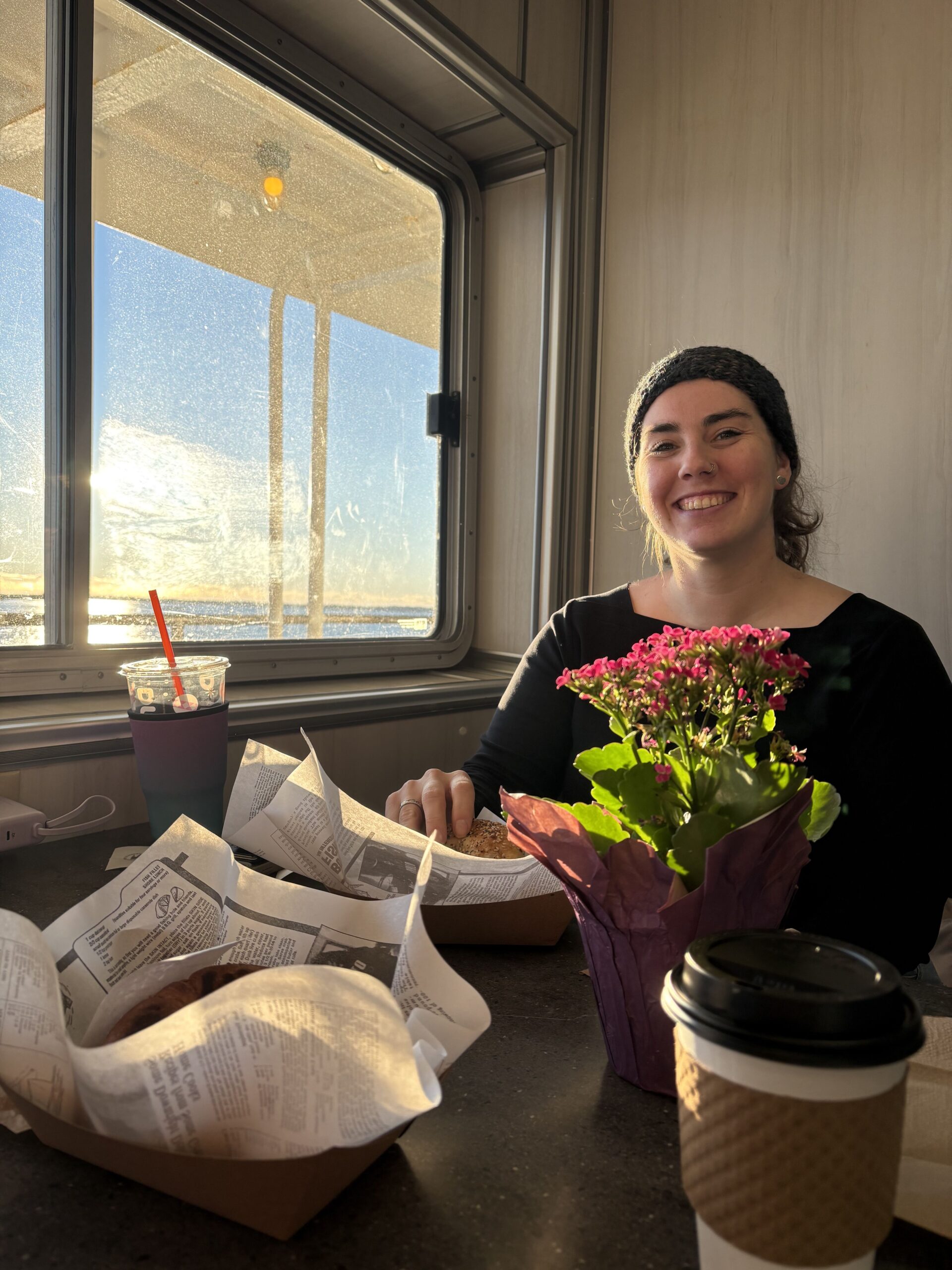
My first visit to Long Island had been under the great care of Ruth Tuthill, and on this trip—after catching the Long Island Ferry in New London with my coworker Claire—we were welcomed once again with the warmth I’ve grown accustomed to. Ruth was already waiting for us, ready to whisk us away and determined to keep us on schedule. Our first stop was Wm. J. Mills & Co., where she dropped us off with plans to return just before lunchtime.
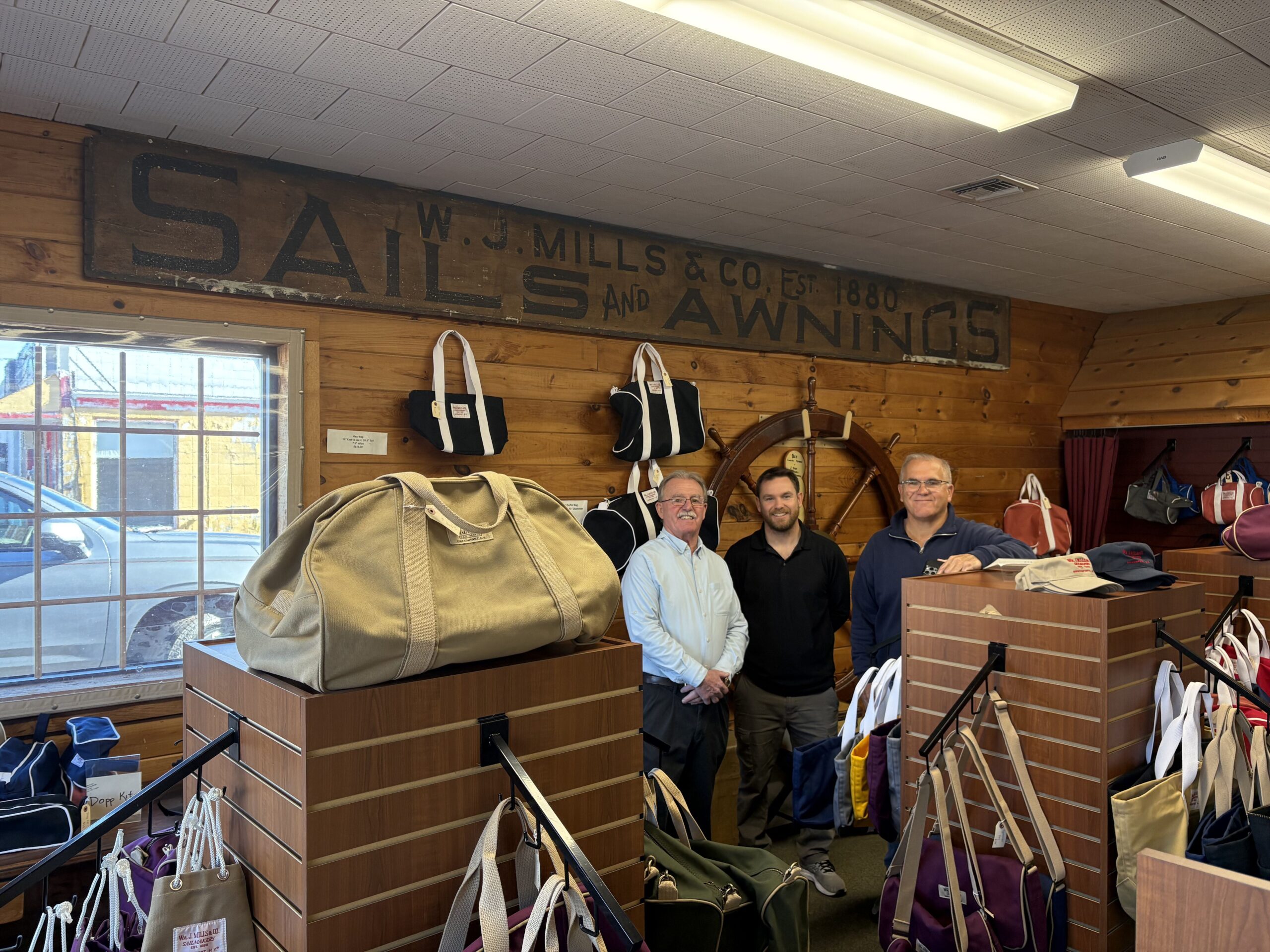
I was eager to meet Jamie, Bob, and Robert Mills of Wm. J. Mills & Co., whose family holds the distinction of being the oldest sailmakers in America. From the moment I first stepped into their Greenport loft, I understood why their legacy endures. It is a place stitched together with history, craftsmanship, and an extraordinary generosity of spirit.
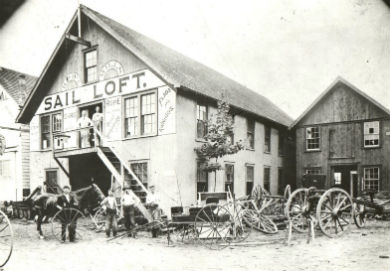
The Mills welcomed us into their loft as if we were old friends. They led us on a remarkable tour—one filled with stories of Jamie and Bob’s childhood, of former and current employees spoken of like family, and of the generations of hands that have shaped the loft into what it is today.
The space itself is a bridge between past and present: old sewing machines, modified and re-modified over the years to meet the company’s evolving needs, stand beside modern equipment that now streamlines the work. Wooden templates that once guided every cut can now be reproduced through CAD and sent directly to the cutter.
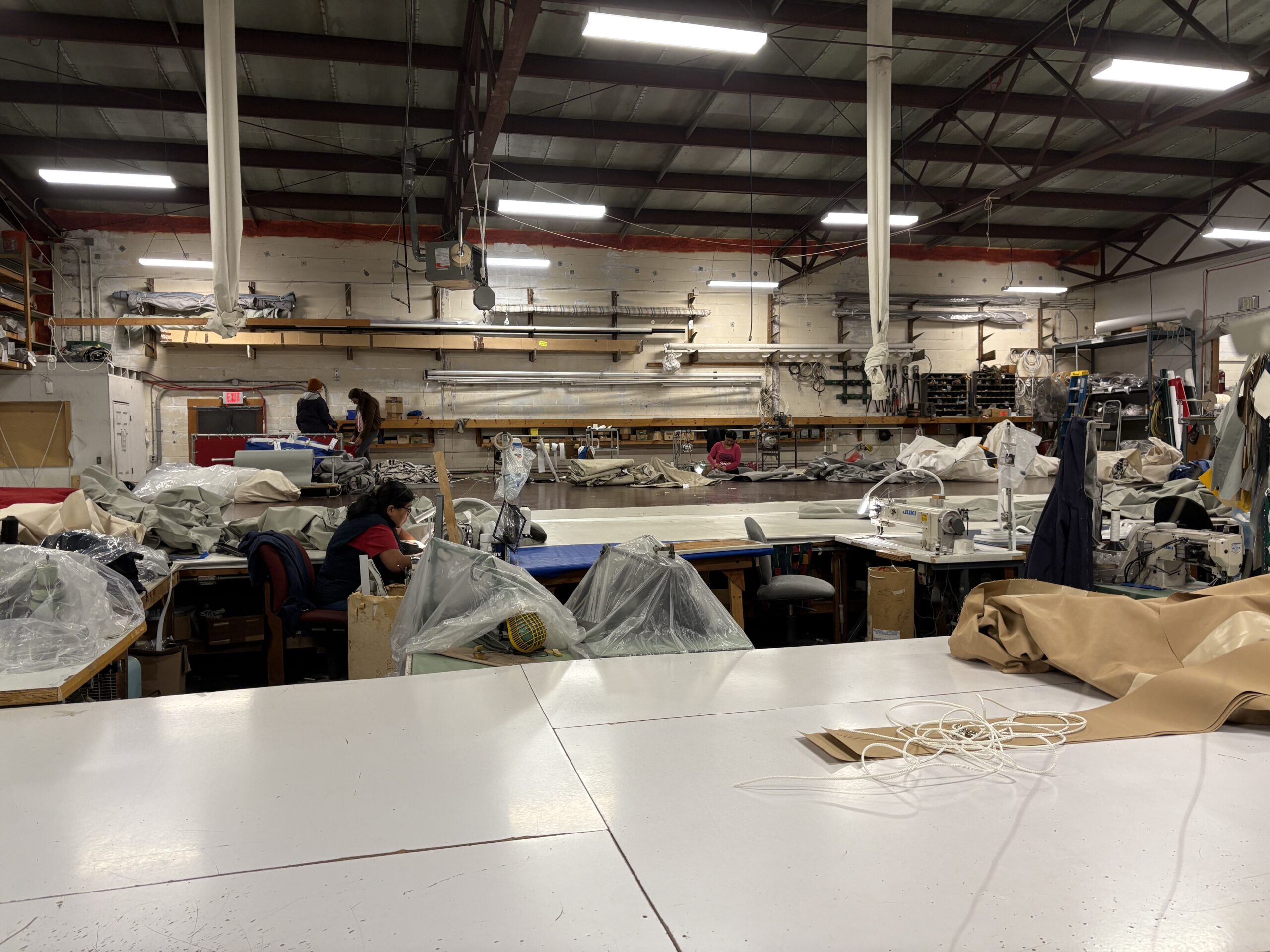
They spoke about their long relationship with Boston Whaler and showed us templates from the era when they were the sole producer of canvas for every Boston Whaler built. To this day, they can produce a cover for any model within twenty-four hours of an order being placed.
There were heavier stories, too—like the fire at a neighboring business that spread to their buildings. They described losing every customer’s awning, and how not only their staff but also neighbors and clients rallied to help them rebuild. They talked about the early days of COVID, when the community joined forces—brewers, first responders, and the Mills family—working tirelessly to make masks and protective supplies. They said they had never worked harder in their lives than they did during those two events.
They showed us their father’s tinkering workshop, known as “The Toy Shop,” a treasure trove of tools and inventions. On the door hung a map tracing one of his many voyages—a specific trip tied to a memorable event. He knew the Long Island Sound so intimately that he could travel from Greenport to Block Island without a compass, even in near-zero visibility.
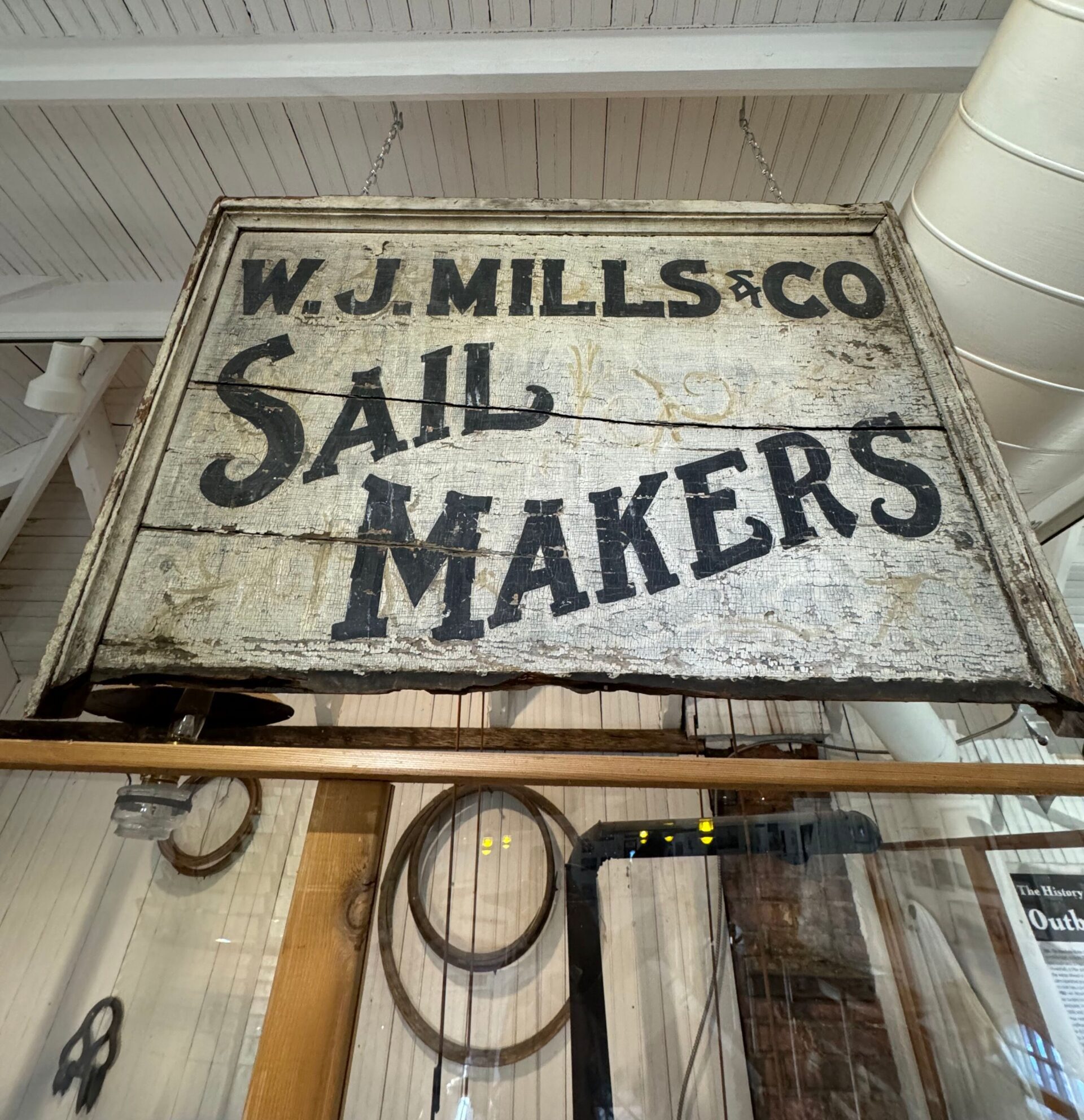
We saw coveted tools, the original Mills duffle bag, canvas labels, and one of the old trade signs. By the time Ruth reappeared—punctual as ever, waiting patiently at the door—it was unmistakably clear how welcome we were. I felt treated like family. I left humbled, honored to have been invited so generously into their lives and entrusted with their stories, and eager to return for more. (Click here to Learn more about the Mills Family)
Sterling Historical Society
From the loft, our day shifted from living craftsmanship to the preservation of Greenport’s past. We headed to the Sterling Historical Society, where Ruth had arranged for us to meet Carole Monsell. Housed in a beautifully maintained 19th-century residence, the society documents the village’s deep maritime roots—from whaling and fishing to boatbuilding, lifesaving, and early local industry. Every room feels like a portal into another era.
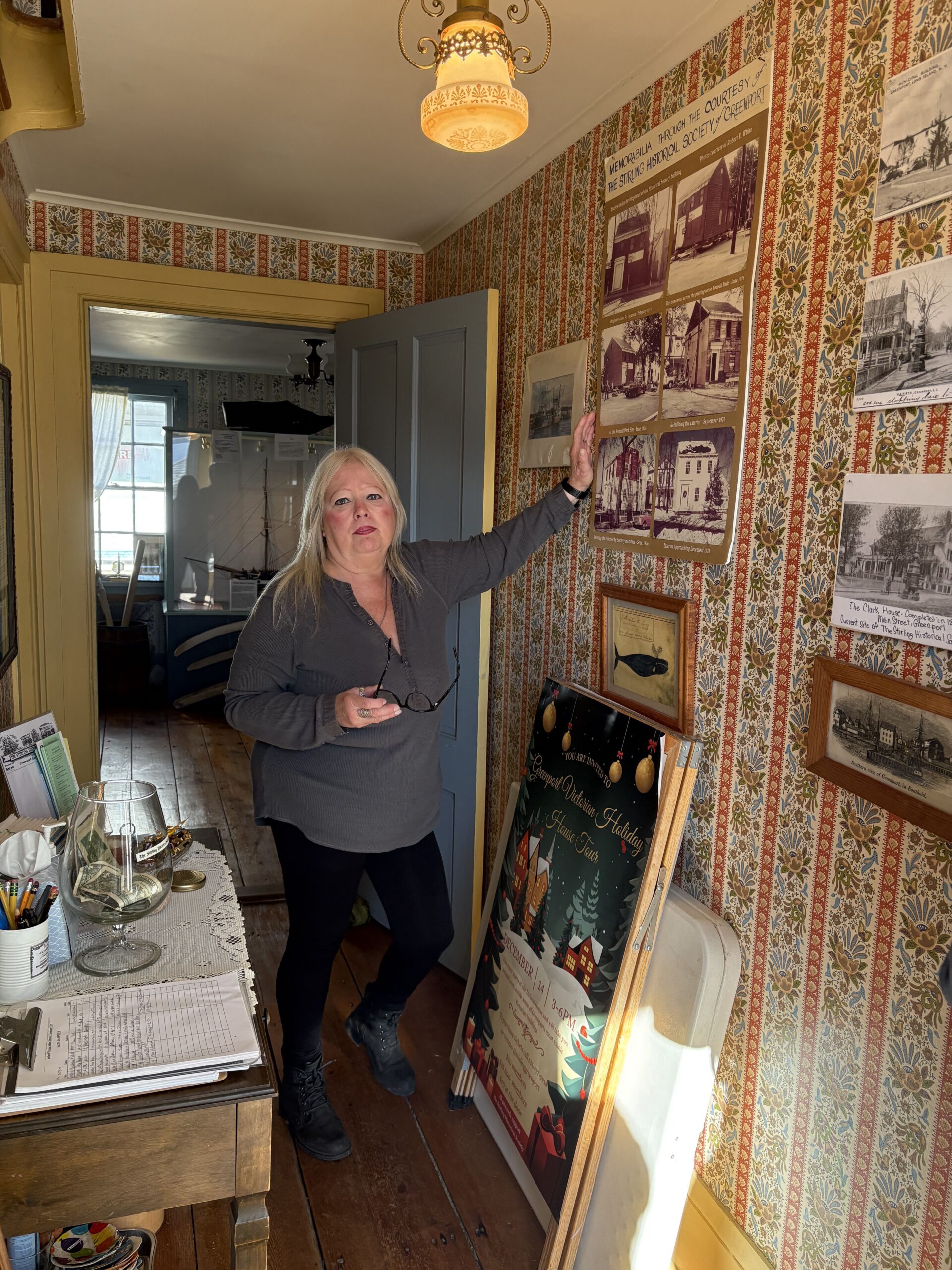
We began on the first floor, where the curated rooms evoke the daily life of Greenport families generations ago. As I climbed the stairs to the second floor, a striking black-and-white photograph immediately caught my eye: Ranger defending the America’s Cup in 1937. Carole, the society’s director and a descendant of Captain George Hiram Monsell, noticed my interest and shared a personal connection. The photograph wasn’t just a historic image—it was a tribute to her uncle, a key figure in Ranger’s success whose contributions had often been overlooked.
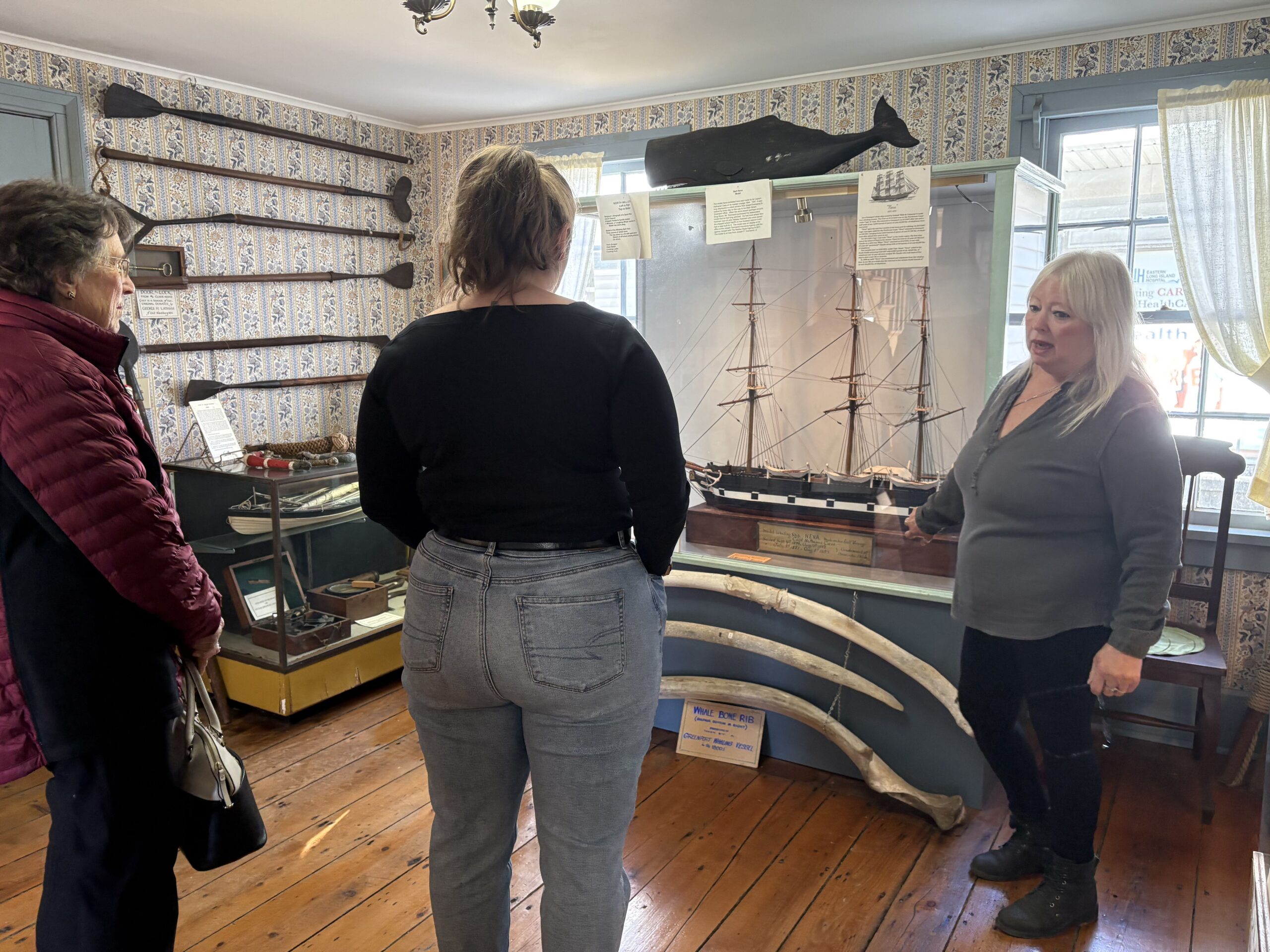
Learning that a single photograph connected her family, the museum in Mystic, and the heritage preserved within this small historical society made the moment feel especially resonant. It underscored how Greenport’s stories continue to ripple far beyond its harbor. (Click here to learn more about Captain George Hiram Monsell)
A Detour to Meet Pat Nelson
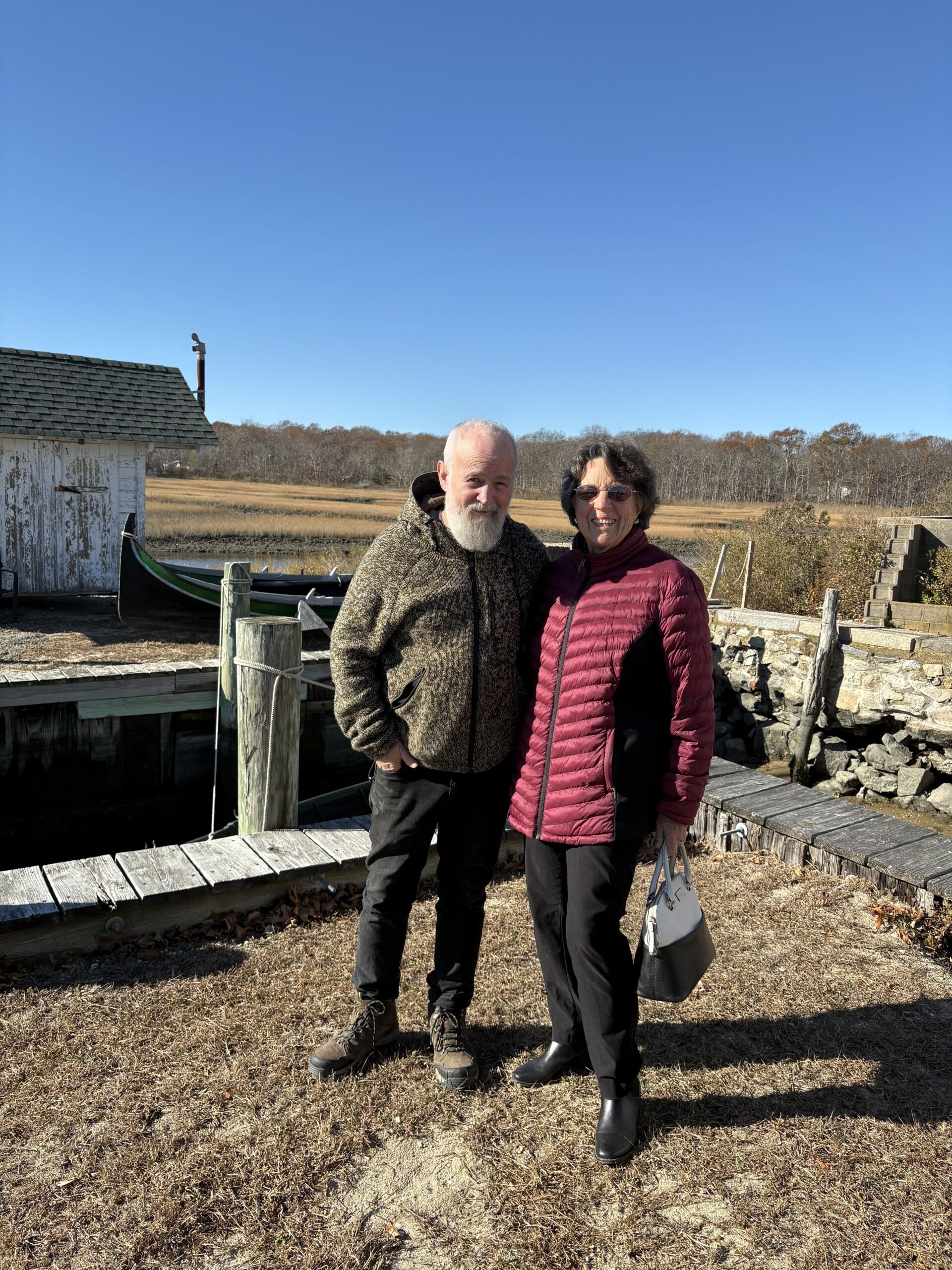
Leaving the historical society, the day took another unexpected turn. Just before climbing into the car, I asked whether we could make a quick stop to meet a gentleman named Pat Nelson—a shipwright whom Walt Ansel, head of the Henry B. DuPont Shipyard at Mystic Seaport Museum, insisted I should know. His home was conveniently on the way to our lunch destination, so Ruth agreed, and we turned down a quiet dead-end road leading to his driveway, which looped into a small roundabout.
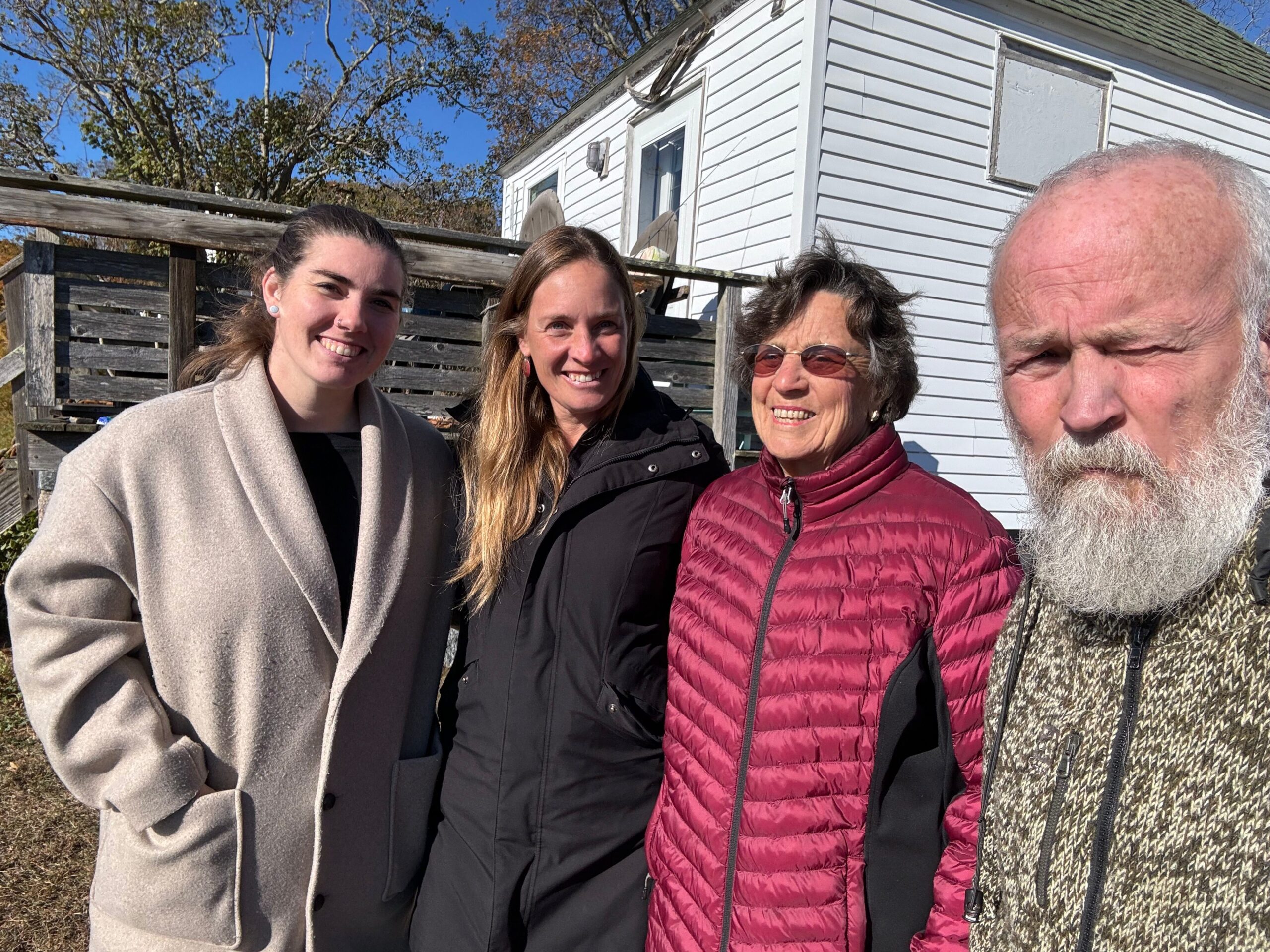
The old buildings and sweeping views struck us immediately. Pat stood waiting with a wide, welcoming smile and ushered us into what had once been his grandparents’ home. After a brief tour, he led us outside to his workshop—filled with remarkable examples of his skill and craftsmanship—and then to an extraordinary structure that had once served as a lifesaving station.
Within minutes, Pat and Ruth discovered shared friends, histories, and stories—one of those serendipitous Long Island connections that feels both improbable and inevitable. Time passed quickly, and before long Ruth gently reminded us that we needed to move on. We said our goodbyes and promised to plan a longer visit. There are so many more stories here that deserve to be heard and preserved.
East End Seaport Museum & Marine Museum
Our final stop before heading back to the ferry was Goldbergs Famous Bagels, where we met Paul Kreiling, a curator at the East End Seaport Museum & Marine Museum over lunch. After we finished eating, we walked a short distance to the museum itself. Housed in the historic 1917 Long Island Rail Road station, the museum stands as a guardian of the region’s maritime heritage—its lighthouses, shipwrecks, fishing traditions, and boatyards. The building and its collections together reflect the community’s enduring relationship with the water and its determination to preserve that legacy.
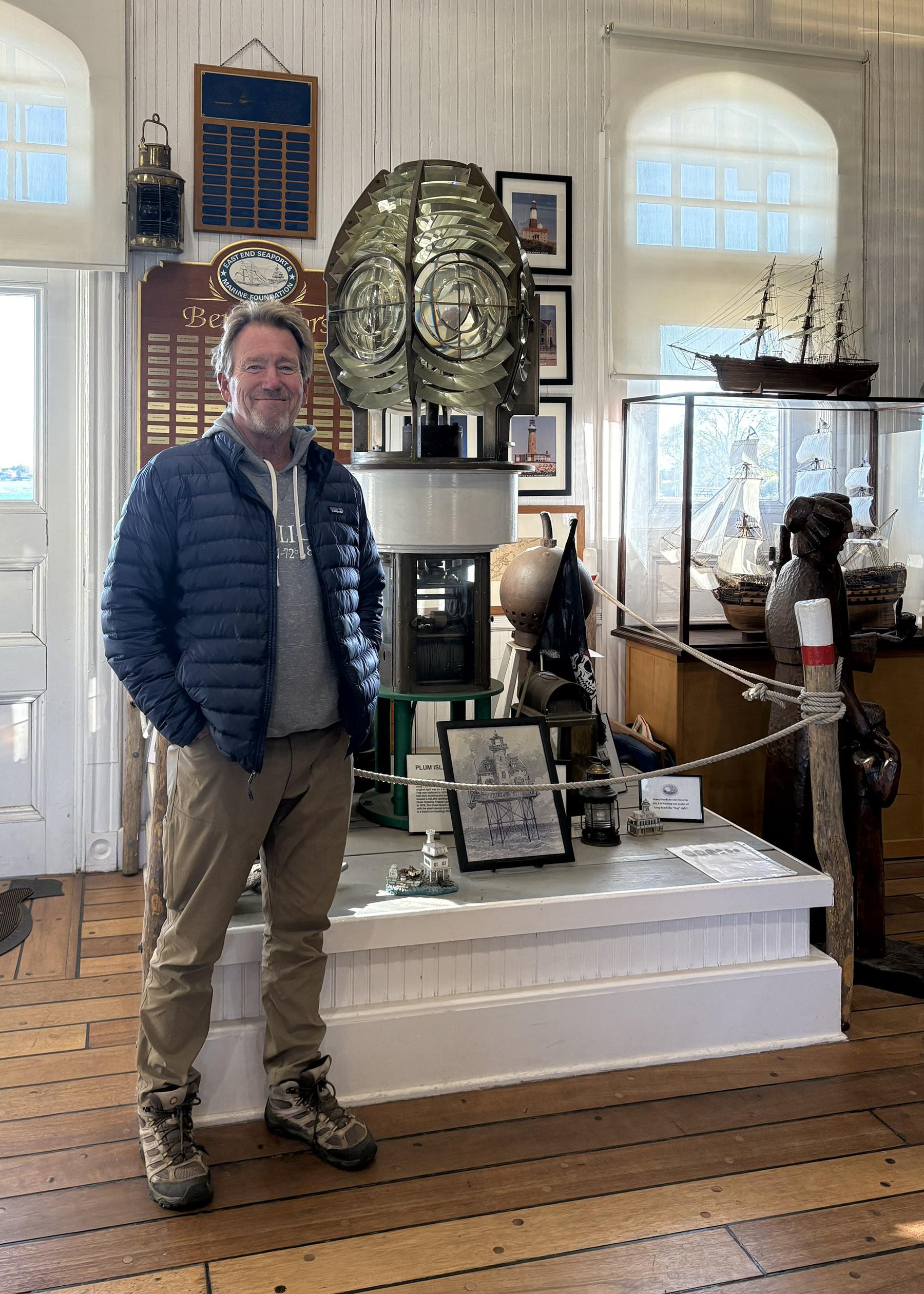
Paul led us on an excellent tour of the museum’s collection, which included remarkable artifacts from the original Wm. J. Mills & Co. sail loft—a tangible link between our morning visit and the broader history of Greenport’s working waterfront. He also spoke about the museum’s stewardship of Bug Light, one of the village’s most iconic and beloved lighthouses. Hearing how volunteers, historians, and community members work together to maintain the lighthouse added yet another layer to my appreciation of the tight-knit maritime world here.
Heading Home
Our day came to an end, and Ruth delivered us back to the ferry. We hugged and said our goodbyes. As we walked aboard, Ruth called out with her familiar spark,
“What should we expect for our next adventure?”